Self-paced with lifetime access
Certificate of attendance
Hands-on ICS pentesting
- Downloadable scripts
Go from hero to zero in being a Professional and certified android malware analyst

In the Android Malware Analysis course, participants will obtain the knowledge and skills to Perform static malware analysis, Perform dynamic malware analysis, Detect malicious and data exfiltration code, Reverse engineer APKs, understand Android security architecture, Understand Android attack surface.
Participants will perform these tasks by learning and implementing tools and techniques while examining malicious programs.
ENROLL NOW! FOR JUST $20
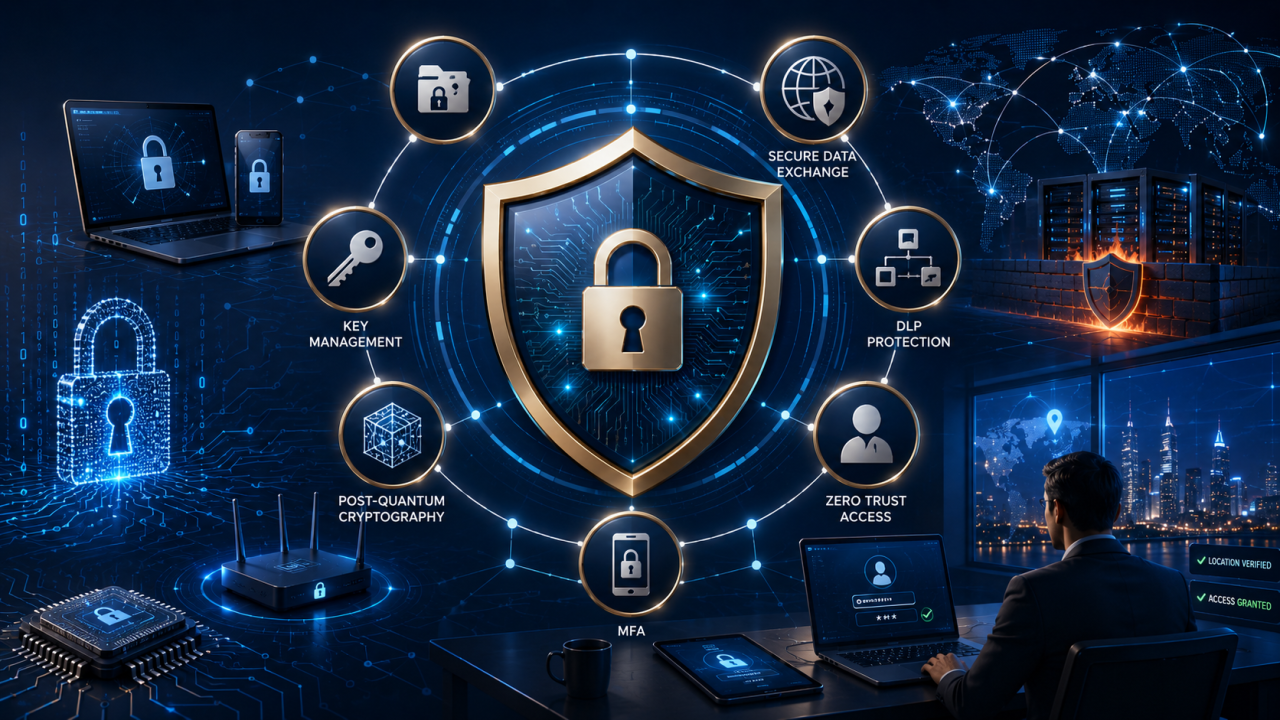
Data Protection, Encryption & Secure Connectivity
Enabling Secure Remote Work and Cryptographic Resilience
Target Audience: IT Administrators, Data Privacy Officers, and Network Architects.
Duration: 1.5 Hours
What You Will Learn:
Apply mandatory encryption for mobile devices, laptops, and sensitive data transfers.
Manage the full Cryptographic Key Lifecycle, including storage and archival.
Implement Zero Trust remote access with geolocation restrictions and MFA.
Secure inter-entity data exchanges using redundant network infrastructure and firewalls.
Key Features: Guidance on Post-Quantum Cryptographic requirements; Data Loss Prevention (DLP) integration strategies.
Course Overview:
Participants will develop a strategy for protecting data at rest and in motion through mandatory encryption controls aligned with the National Encryption Policy. The course provides guidance on Secure Data Exchange, including the use of firewalls, DMZ configurations, and Data Loss Prevention (DLP). Furthermore, it addresses the Secure Remote Work Policy, mandating a Zero Trust approach and robust Multi-Factor Authentication (MFA) to protect organizational assets outside the traditional perimeter.
Policies Referenced: National Encryption Policy; National Data Exchange Security Policy; National Secure Remote Work Policy.
- Section 1: Cryptographic Controls & Key Management
Video 1: Mandatory encryption for Data at Rest (laptops, mobile devices, databases) and Data in Motion (email and network traffic).
Video 2: Establishing a full Key Management lifecycle, including storage, rotation, and archival.
Video 3: Preparing for Post-Quantum Cryptographic requirements.
- Section 2: Securing Data Exchange Architectures
Video 1: Implementing Redundant Network Infrastructure and Firewall Protection for inter-entity transfers.
Video 2: Applying Data Loss Prevention (DLP) controls to monitor and prevent unauthorized transmission.
- Section 3: Zero Trust Remote Work Strategies
Video 1: Transitioning from perimeter-based security to a Zero Trust approach for remote access.
Video 2: Implementing Multi-Factor Authentication (MFA) and robust identity management.
Video 3: Enforcing Client Device Security and monitoring remote connection posture.
Course Curriculum